
My back started giving me trouble about six months into helping my mother with her daily transfers. Bed to chair. Chair to toilet. Toilet to walker. Four or five moves a day, and my lower back was talking to me by evening. I figured it was just part of the job. Then a physical therapist at my mother's clinic watched me do a transfer and stopped me mid-move. 'You're grabbing her clothes,' she said. 'Get a gait belt. Today.' Twenty-four hours later, the soreness started going away. Not because I got stronger. Because I stopped doing the transfer wrong.
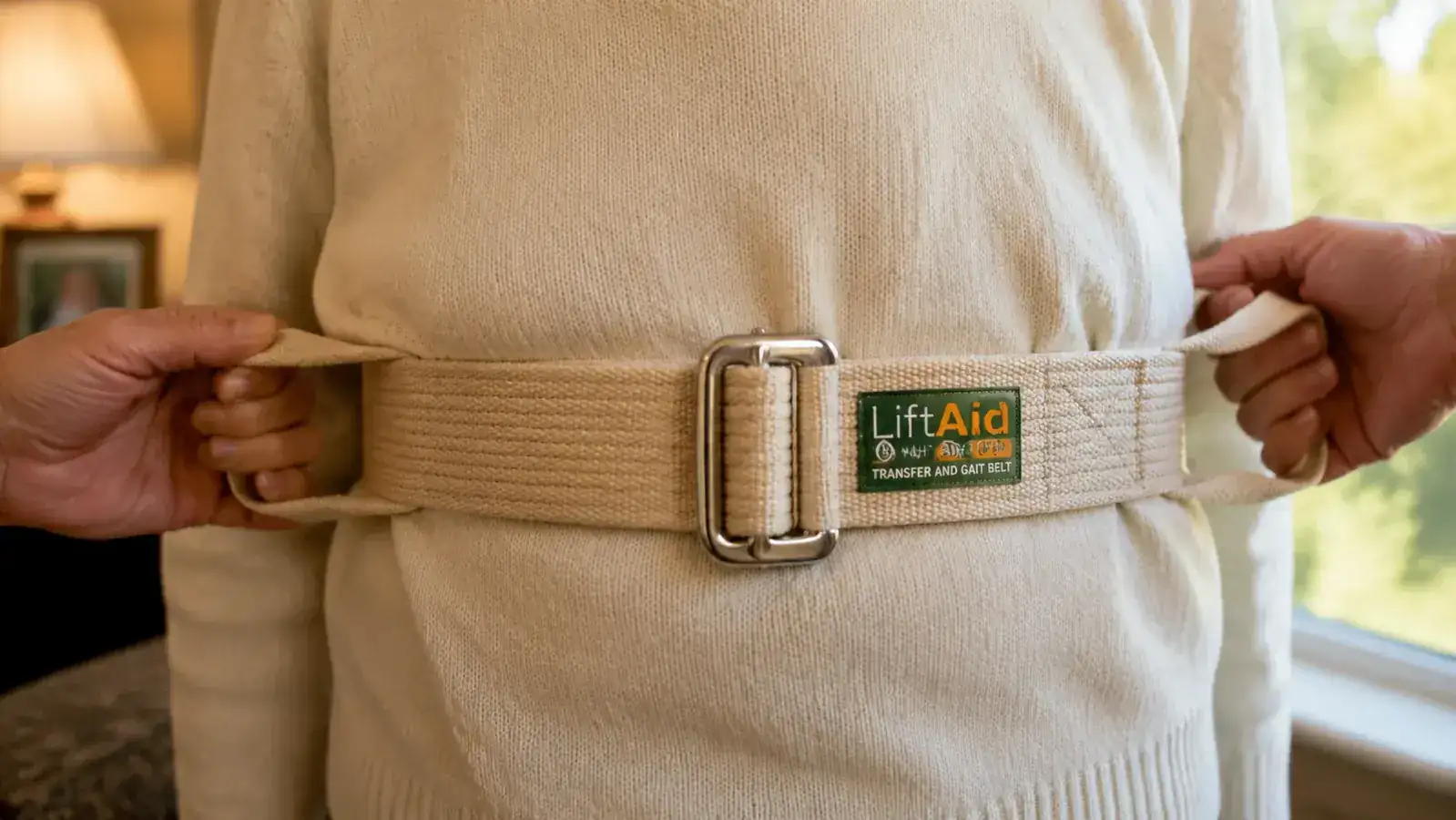
A gait belt is a simple canvas strap, about 60 inches long, with a buckle. You fasten it around the patient's waist and grip the loops or the belt itself instead of grabbing their arms, their clothing, or their armpits. That one change shifts the physics of every transfer. If you're a home caregiver with your own back issues, and most of us are, this is the first tool you should own. It costs less than a lunch out. For everything I learned after two years of daily transfers, see my full two-year review of the LiftAid gait belt. Here's the short version of why it works.
Your back is the first thing that gives out when you're a caregiver. This belt is how you protect it.
The LiftAid Transfer and Gait Belt is 60 inches of reinforced canvas with a metal buckle and sewn-in grip loops. Under eight dollars. Holds up to daily use for years.
Amazon Check Today's Price on Amazon →It Gives You a Stable Handle Instead of a Guess
When you grab someone's arm or belt loop, you're holding something that can shift, stretch, or slip. A gait belt sits flat and firm around the thickest part of the torso. Your grip lands on a fixed anchor, not a moving target. That stability alone cuts the micro-adjustments your back makes when the grip slips.
It Lets You Stand Closer to the Patient
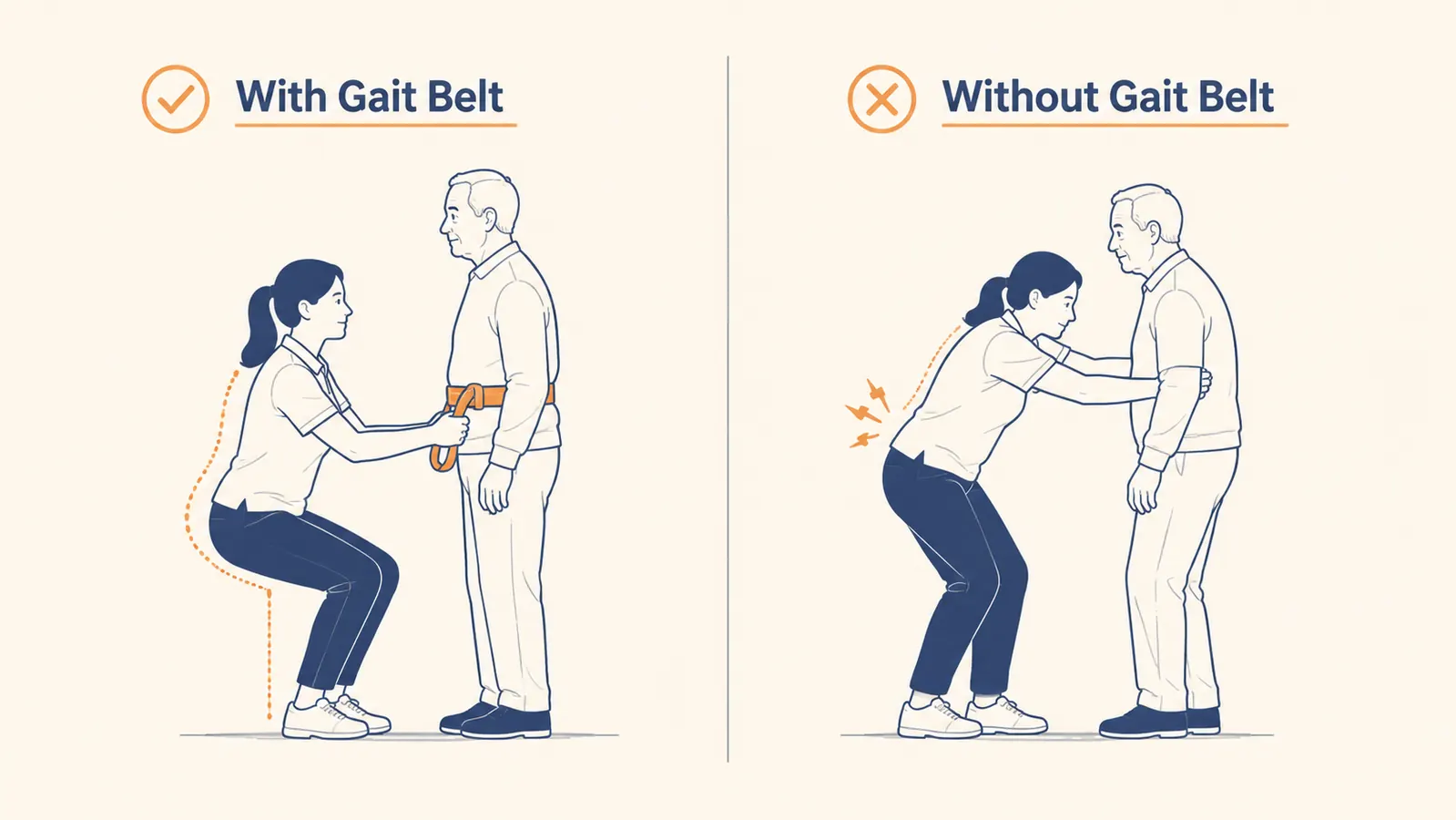
The farther out you reach, the more load your lumbar discs take. With a gait belt, you can stand right beside or just in front of the person you're helping, keep your elbows in, and use your whole body instead of just your arms. Physical therapists call this 'reducing the moment arm.' You'll just call it your back not hurting anymore.
It Keeps Your Knees Bent and Your Spine Upright
When there's nothing solid to hold, you tend to bend at the waist to get under the person. That forward bend under load is how people blow out their discs. The gait belt gives you a grip at waist height, which naturally cues you to stay tall and push from your legs instead. The belt doesn't fix your technique automatically, but it creates the conditions where good technique is actually possible.
It Stops the Panic Grab
Every caregiver knows the panic grab. The patient starts to tip or stumble, and your body reacts before your brain does. You grab whatever you can reach. That grab, often at a bad angle with full body weight behind it, is how caregivers tear rotator cuffs and throw out their backs. With a gait belt, your hands are already on the belt before the transfer begins. If something goes wrong, you catch them from a handle you're already holding.
It Distributes Load Across the Patient's Core, Not Your Wrists
Pulling someone up by the wrists or forearms concentrates force on a small lever. The gait belt wraps the trunk, so the lift force spreads across the patient's whole torso. You feel less resistance because you're working with better physics. Less resistance means less strain on your hands, wrists, and the tendons up your forearms that caregivers chronically overuse.
I thought my back problems were just part of caregiving. Turned out they were part of doing transfers without the right tool.
It Makes the Patient Feel More Secure, Which Means They Resist Less
When a patient feels unsteady, they grab back. They stiffen up, lean into you, or clutch your arm. That counter-force is unpredictable and hard on your back. A gait belt gives the patient something firm against their body, and that firmness communicates security. Patients relax. A relaxed patient weighs the same but moves cooperatively. Cooperative is a lot easier on your spine than resistant.
It Keeps the Movement Smooth and Controlled
Jerky transfers hurt you. When you're groping for a grip, you end up moving in starts and stops. The gait belt gives you continuous contact through the whole arc of the movement, bed to standing, chair to standing, so you can guide at a steady pace. Steady pace means your muscles are working through a full controlled range instead of absorbing sudden spikes.

It Works Whether You're Behind, Beside, or In Front
Different transfers call for different positions. Getting someone up from the toilet is different from moving them from bed. The gait belt works from any angle because the loops are distributed around the belt. You're not locked into one grip position. That flexibility means you're not contorting your own body to reach a good hold in a tight bathroom or beside a low bed.
It Slows Down the Whole Transfer, and Slow Transfers Are Safer Transfers
There's something about having a proper grip that naturally slows you down. You're not rushing to get a hand under an arm before the person starts to move. You're set up ahead of time. Slower transfers give the patient time to help push up, give you time to check your footing, and reduce the chance that either of you gets into trouble. Most back injuries happen when people rush.
It Extends How Long You Can Keep Doing This
If you're a caregiver in your 50s, 60s, or 70s, your own body is the most important piece of equipment in the house. Throw your back out and you can't help anyone. A gait belt is not a small convenience. It's what lets you do five transfers a day for years without ending up on the sidelines yourself. I've been using the LiftAid belt almost every day for two years. My back is fine. That matters.
What I'd Skip
You don't need a padded gait belt unless the patient has known abdominal sensitivity or a stoma. The padding adds bulk and actually reduces your grip. You also don't need a belt with quick-release plastic buckles for home use. Plastic buckles are fine for healthcare settings where speed matters, but at home you have time to use a proper metal buckle that won't accidentally pop under load. The LiftAid uses a metal buckle, which is part of why I kept coming back to it. For the full breakdown of how to put the belt on correctly and which grip to use for different transfers, see the step-by-step guide to using a gait belt correctly.
Under eight dollars. That's the price. If it saves your back for even one year of daily caregiving, it paid for itself on the first transfer.
One tool. Under eight dollars. Protects the back you can't afford to lose.
The LiftAid Transfer and Gait Belt has 4,549 reviews and a 4.8-star rating. The 60-inch length fits most patients up to about a 52-inch waist. Metal buckle, reinforced loops, machine washable. This is the one I use.
Amazon Check Today's Price on Amazon →