When my mother came home from her hip replacement, the discharge nurse handed us a folded sheet of paper and said, "Get these things before she arrives." The raised toilet seat with arms was third on the list, right after the shower chair and the grabber tool. I had no idea what it was. I ordered it that evening and had it set up by the time she walked through the door the next morning. Three years later, it is still on that toilet. It has never wobbled. She has never come close to a fall using it.
If you are here because someone in your house just had hip or knee surgery, or is scheduled for one, this page will give you the ten specific reasons that raised seat matters during recovery. No fluff. Just what the discharge sheet does not have space to explain.
The item your surgeon listed on the discharge sheet is under $35 on Amazon.
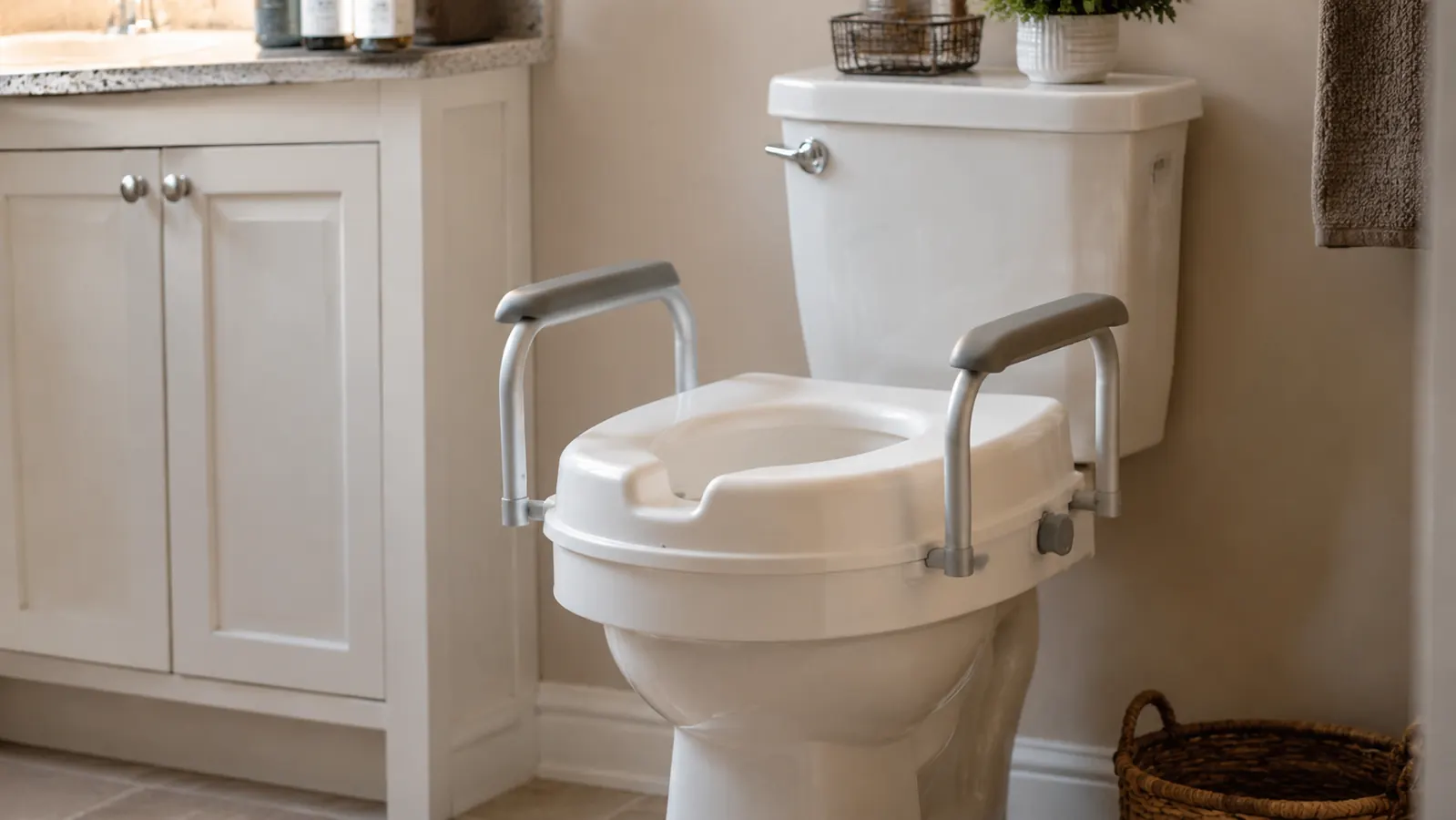
The Drive Medical 2-in-1 Raised Toilet Seat with padded arms is what physical therapists and orthopedic nurses most commonly recommend for post-surgery home recovery. It fits standard and most elongated toilets and locks in place without tools.
Amazon Check Today's Price on Amazon →It Keeps the Hip Below the 90-Degree Limit
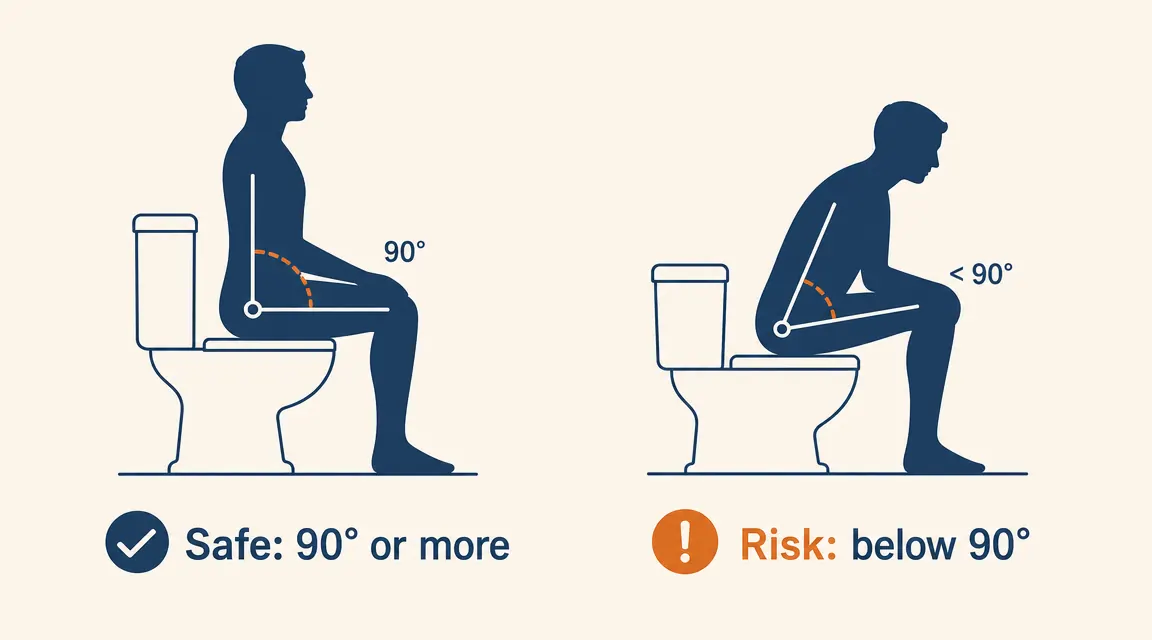
Every hip replacement patient gets the same rule: do not bend your hip past 90 degrees while the joint heals. A standard toilet seat sits about 15 to 17 inches off the floor. For most adults, sitting down on that requires the hip to flex past the limit, which can dislocate the new joint. A 3.5-inch raised seat brings the sitting surface up to roughly 19 to 20 inches, which keeps the hip in the safe zone without any effort or thought from the patient.
Amazon See the Drive Medical Raised Toilet Seat on Amazon → →
The Arms Give Something to Push Against
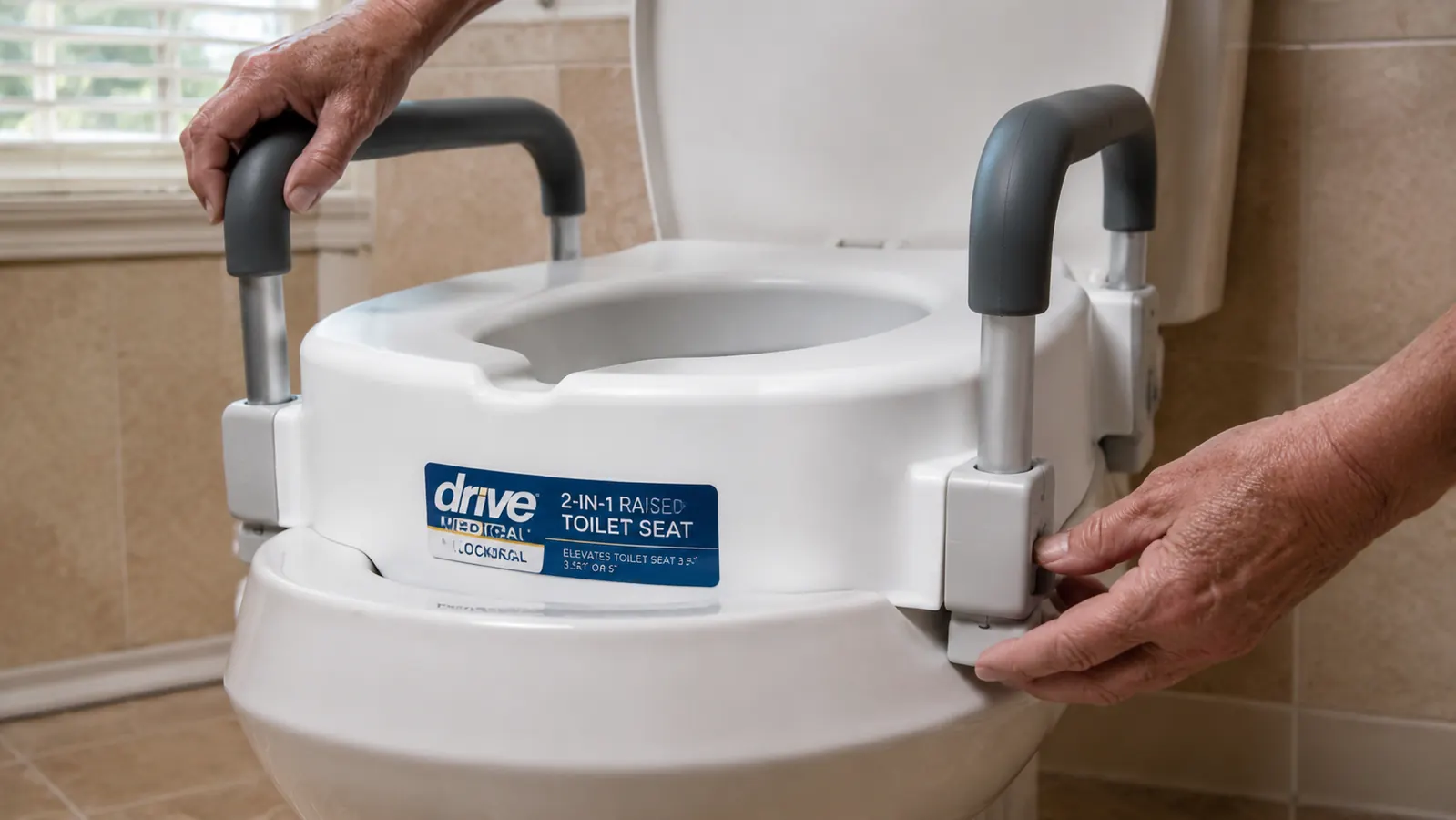
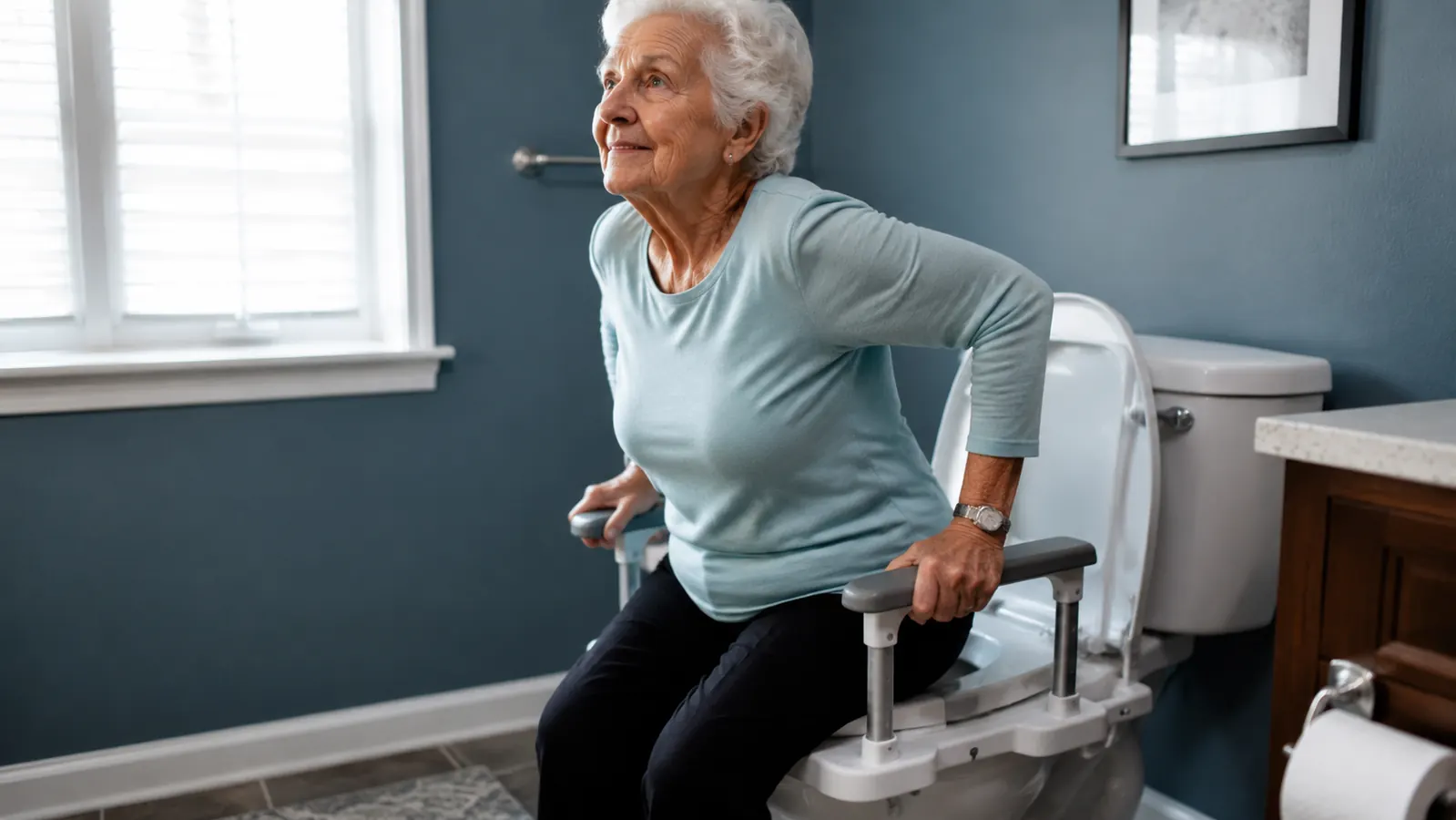
Standing up from a toilet is one of the hardest movements in early recovery. The legs are weak, the core is guarded, and the fear of doing something wrong is real. The padded arms on the Drive Medical seat give the patient a surface to push against with both hands, which takes weight off the new joint and reduces the strain on the caregiver standing beside them. My mother still uses those arms every single time, even now.
It Fits Over the Toilet Without Modification
No plumber, no tools, no drilling into tile. The Drive Medical seat locks onto the existing toilet bowl using a bracket that tightens by hand. Installation takes about five minutes. This matters because most people are setting it up the day their person comes home, not weeks in advance. You need it to work immediately, not after a hardware store run.
It Removes When Guests Need the Regular Toilet
One of the small indignities of recovery equipment is that everything in your house suddenly looks like a hospital. The Drive Medical seat comes off in seconds without tools. If your person wants the bathroom to look normal when company comes, or if another family member needs the toilet at night, it unclips and sets aside in less time than it takes to read this sentence.
The discharge nurse said to get it before she arrives. I did. That was three years ago. It is still on that toilet. Best thirty dollars I ever spent in this house.
It Reduces the Fear of Using the Bathroom Alone
Post-surgery patients often hold off on using the bathroom because they are scared of falling or dislocating the hip. That leads to dehydration, constipation, and added recovery complications. A raised seat with sturdy arms is the difference between a patient who can go independently and one who needs a caregiver present every single time. Giving someone back that private task is not a small thing.
It Protects the Knee After Knee Replacement Too
Hip surgery gets most of the attention, but knee replacement patients face the same problem. Lowering onto a standard toilet puts significant strain on the recovering knee joint and requires the kind of controlled descent that most patients cannot manage safely in the first six to eight weeks. A raised seat cuts the range of motion required and makes sitting and standing less painful from day one.
The Padded Arms Are Easier on the Hands
Patients on blood thinners or with arthritis in their hands will notice the difference between padded arms and bare plastic immediately. The Drive Medical seat uses foam padding on the armrests, which is a small detail that matters when your person is leaning on those arms fifteen times a day. Hard plastic edges bruise the forearms. Padded arms do not.
It Handles Real Weight
The Drive Medical raised toilet seat is rated for 300 pounds. That is not a number they inflated for marketing. It means the plastic shell, the locking bracket, and the arm brackets were engineered for someone who is relying on this thing, not just resting on it. For a larger person or someone who is truly putting all their weight on the arms to push up, that rating matters.
It Works on Standard and Most Elongated Toilets
A lot of these products fit only round bowls, which means you measure your toilet, order the seat, and then find out it does not fit. The Drive Medical 2-in-1 is designed for standard toilets and also fits most elongated bowls. If you are not sure which you have, the elongated bowl is the one that looks like an oval and is about two inches longer front to back. Most modern toilets in American homes are elongated.
It Costs Less Than a Single Copay
At current pricing, this seat costs less than most specialist office visit copays. It is not a luxury item and it is not a medical device that needs insurance approval. You order it, it arrives in two days, you snap it on, and your person uses it that evening. For something that directly prevents a fall, a dislocation, or an emergency room visit in the first weeks of recovery, it may be the clearest value per dollar in this whole niche.
What I Would Skip
The only version of this product I would not bother with is the basic raised seat without arms. You can find those for under fifteen dollars, and they look like a deal until your person tries to push up from one and realizes there is nothing to hold. The arms are the whole point for post-surgery recovery. The Drive Medical 2-in-1 includes them, and they remove when the person no longer needs them, so you are not paying for something you cannot use later.
I would also skip any raised seat that does not have a locking attachment. Seats that just rest on the bowl will shift when the person shifts their weight, and a sliding seat during recovery is a fall waiting to happen. The locking bracket on the Drive Medical takes an extra sixty seconds to tighten, and it is worth every second. If you want the full installation walkthrough, I put one together at How to Install a Raised Toilet Seat for an Elderly Person. And if you want to know how this seat held up over three years of daily use in my mother's house, that is over at my Drive Medical Raised Toilet Seat long-term review.
Skip the version without arms. You save eight dollars and lose the only thing that actually helps the patient push up safely. That is not a trade worth making.
If someone in your house is coming home from hip or knee surgery, get this on the toilet before they arrive.
The Drive Medical 2-in-1 Raised Toilet Seat with removable padded arms is the specific product physical therapists and discharge nurses most commonly recommend for post-surgery home recovery. It locks in place, handles 300 pounds, fits most toilets, and costs less than a single physical therapy copay.
Amazon Check Today's Price on Amazon →