
The first time I watched my mother try to step over the tub wall on her own, I stood there holding my breath. She had both hands on the grab bar, one foot planted, and the other coming up and over. For about two seconds she was balanced on one leg in a wet, slippery bathroom. That is the moment. That is when falls happen. According to the CDC, one in four adults over 65 falls each year, and the bathroom is consistently among the most dangerous rooms in any house. The fix is not more grip strips on the floor. The fix is eliminating that two-second window entirely.
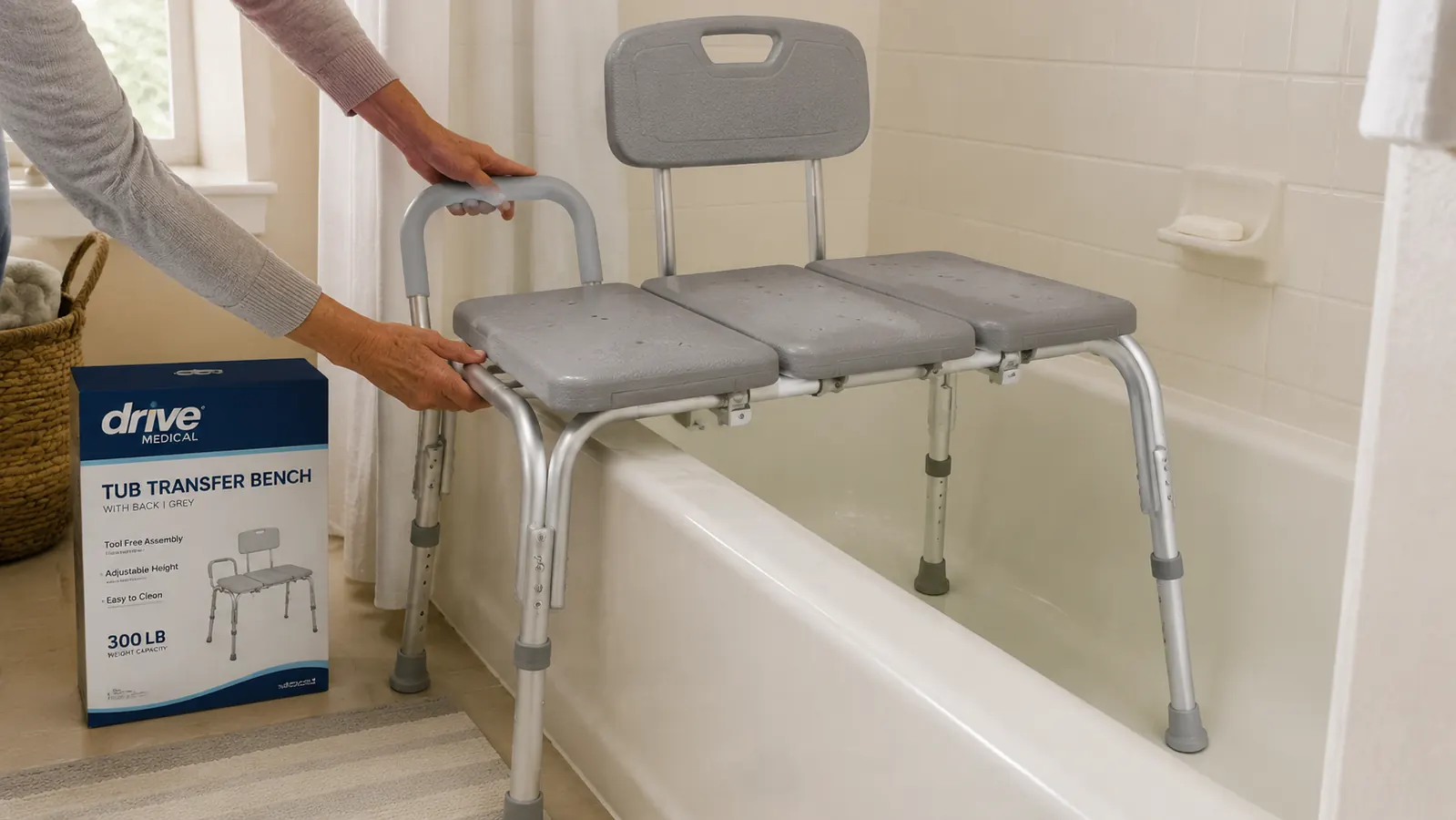
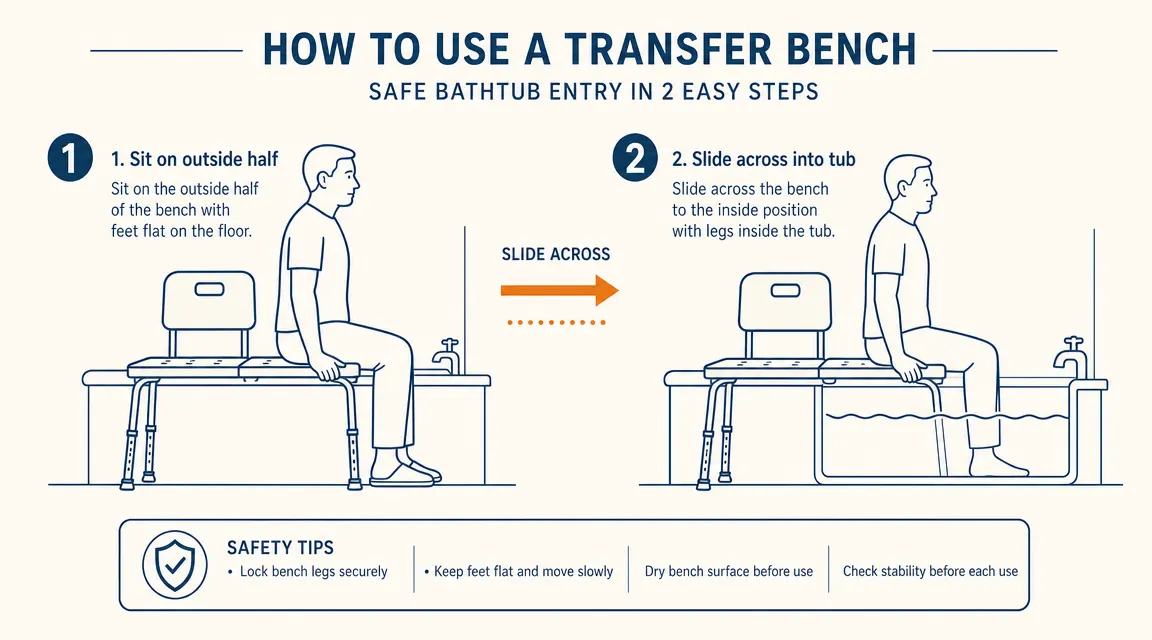
A tub transfer bench does exactly that. You sit on the outside portion of the bench while it straddles the tub wall, then you slide across the seat and lower in. No standing on one leg. No throwing a leg over the edge. I put the Drive Medical tub transfer bench in my mother's bathroom about two years ago, and I have watched it change the way she handles the whole bathroom routine. Here are ten specific reasons it works.
If stepping over that tub wall is the part that worries you most, this bench removes it completely.
The Drive Medical Tub Transfer Bench has over 32,000 Amazon reviews and a 350 lb weight capacity. Height-adjustable legs, a backrest, and a design that fits most standard tubs without tools.
Amazon Check Today's Price on Amazon →It Eliminates the One-Leg Balance at the Tub Edge
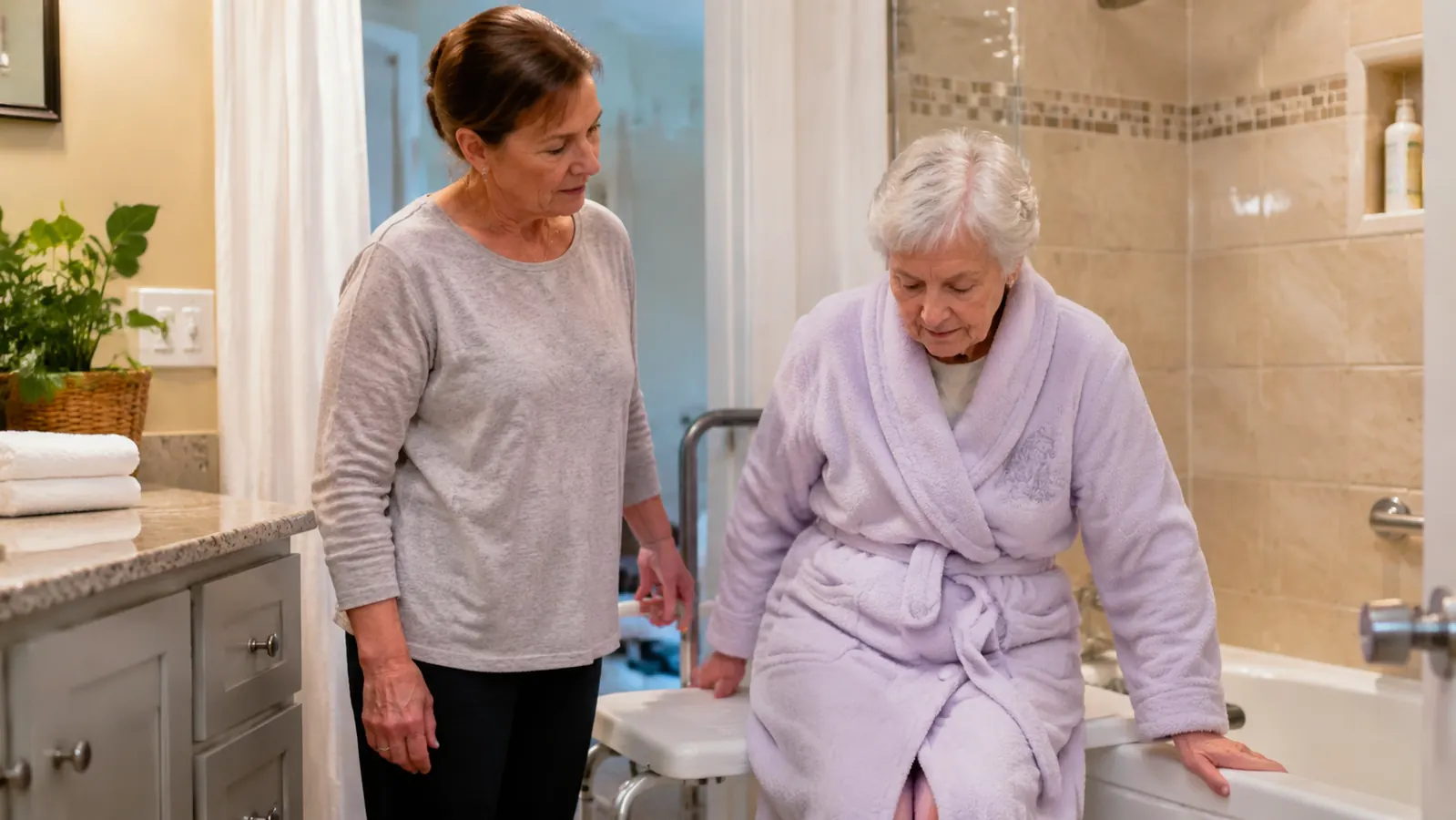
This is the big one. Every traditional tub entry requires a moment where your entire body weight is on one leg while the other comes up and over a 14-to-18-inch wall. For an older adult with hip weakness, knee problems, or just slower reflexes, that moment is where falls happen. A transfer bench removes that step entirely. You sit down outside the tub, swing your legs over the wall while seated, and you are in. Your feet never need to leave the floor at the same time.
It Keeps Your Center of Gravity Low and Stable
Standing transfers are dangerous because your center of gravity is high and your base of support is narrow. Seated transfers lower the center of gravity to somewhere around hip height, which dramatically reduces the physics of a tip-over. The bench does not move. You are not pivoting, stepping, or swinging your arms for balance. You are sliding. Sliding is as stable as it gets.
It Supports Weight Through the Transfer, Not Just Before or After
A grab bar helps you steady yourself before and after the step. It does not support you during it. A transfer bench supports your full body weight the entire time you are moving in or out of the tub. There is no gap in the support chain. For someone with upper-body weakness who cannot bear down on a grab bar reliably, that continuous support is the difference between safe and not.
The Backrest Prevents Backward Falls Inside the Tub
Once you are inside the tub, the backrest gives you something solid behind you. Slipping backward on a wet tub surface is its own hazard, separate from the entry. The Drive Medical bench has an adjustable backrest that anchors you in place and gives you a surface to push off of when you are ready to stand up and exit. My mother says she feels like she is sitting in a chair, not balanced on a slippery surface.
She told me it was the first time in two years she had bathed without feeling like she was taking a risk. That is not a small thing.
Height-Adjustable Legs Mean a Stable Four-Point Contact Every Time
Uneven floors are common in older homes. The Drive Medical bench has four independently adjustable legs, so all four feet sit flush against the floor and tub surface regardless of minor variations. A bench that wobbles is worse than no bench at all. Adjust the legs once when you install it, check them monthly, and the bench will never rock or shift under load.
It Reduces the Need for a Caregiver to Be Present
Here is the dignity angle, and it matters more than people expect. When someone needs another person in the bathroom to help them bathe, they often start skipping baths. They say they are not dirty yet, or they do not want to be a bother, or they will do it tomorrow. Skipping bathing leads to skin problems, isolation, and loss of self-respect. The transfer bench lets many older adults bathe independently, which means they actually bathe. That is a health outcome, not just a convenience.
The Bench Spans Both Sides of the Tub Wall, Creating a Stable Bridge
Two legs are inside the tub, two legs are on the bathroom floor. This bridge design means the bench cannot slide in or out during use. There is no slipping toward the drain, no creeping away from the wall. The tub edge itself becomes part of the support structure. That is a meaningfully different safety profile from a shower chair sitting loose on the tub floor.
It Pairs Naturally with a Handheld Showerhead
Once someone is seated on a transfer bench, a fixed showerhead is mostly useless. A handheld showerhead on a slide bar lets the person direct water where they need it without standing up or twisting. The bench and a handheld showerhead together create a complete seated bathing system where the person barely needs to shift weight at all. If you are buying the bench, budget another twenty dollars for the showerhead and install them the same afternoon.
The 350 Lb Capacity Removes Weight-Limit Worry
A lot of shower chairs top out at 250 or 300 lbs. The Drive Medical bench is rated to 350 lbs, which covers the large majority of users without any mental calculation required. Weight limits are not just a safety floor, they are a confidence factor. When someone sits down and the bench does not flex or creak, they relax. A relaxed person moves more smoothly and falls less. The capacity matters even if your parent weighs 170 lbs.
It Costs Less Than One Emergency Room Co-Pay
A hip fracture from a bathroom fall has an average hospital cost in the tens of thousands of dollars, and that is before the rehabilitation stay. The Drive Medical transfer bench costs around fifty dollars and takes about twenty minutes to assemble with no tools. I am not saying this to be dramatic. I am saying it because the math is so lopsided that the only real question is why someone would wait. If you are reading this because a doctor said "fall risk," stop reading and order the bench today.
What I Would Skip Instead
A lot of families start with grip strips and a grab bar. Both are worth having. Neither one is a substitute for the bench. Grip strips help on the tub floor once you are already in. A grab bar helps with the step-over if your arm strength is good. But neither one removes the one-leg-over-the-wall moment, and neither one supports your weight during the transfer itself. If the goal is to prevent a fall, start with the bench. You can add the grab bar and the grip strips around it. For a full walkthrough on setup and leg adjustment, see my guide on how to set up a transfer bench for an elderly person. If you want the full long-term picture on how this bench holds up after real daily use, read my two-year review of the Drive Medical transfer bench.
Grip strips help you once you are in the tub. A transfer bench helps you get there without the fall happening in the first place.
A fifty-dollar bench, twenty minutes to set up, and one less thing to lie awake worrying about.
The Drive Medical Tub Transfer Bench has over 32,000 verified reviews, adjustable height for most standard tubs, and a backrest your parent will actually use. It is the first thing I tell every caregiver to buy.
Amazon Check Today's Price on Amazon →